
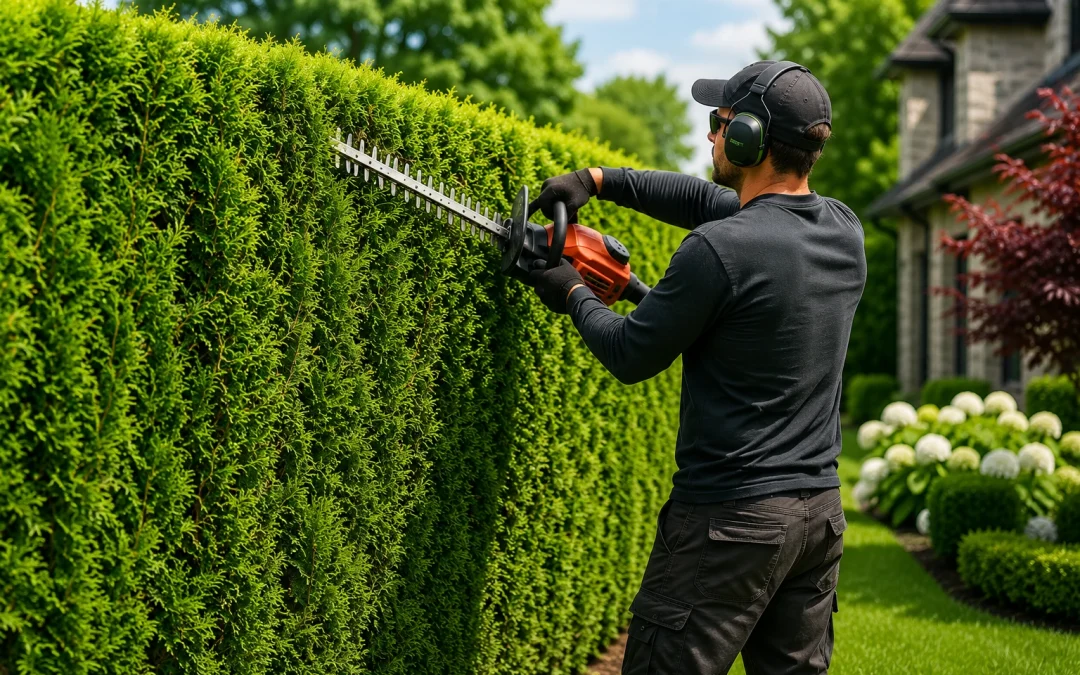
How Often Should Hedges Be Trimmed?
Most hedges should be trimmed between 2 and 4 times per year, depending on the hedge species, growth rate, and desired appearance. Fast-growing privacy hedges such as cedar often require trimming every 4–8 weeks during the growing season, while slower-growing ornamental hedges may only need maintenance a few times each year.
For Ottawa homeowners, the ideal hedge trimming schedule typically includes a spring trim, a summer maintenance trim, and a light trim in early fall. Regular maintenance helps keep hedges healthy, attractive, and properly shaped throughout the year.
Why Hedge Trimming Is Important
Hedges are more than just landscape features. They provide privacy, define property boundaries, improve curb appeal, and enhance the overall appearance of your outdoor space.
Regular hedge trimming helps:
- Encourage dense and healthy growth
- Maintain a neat and attractive shape
- Improve sunlight penetration
- Increase air circulation
- Reduce the risk of pests and disease
- Prevent overgrowth near walkways and driveways
- Improve overall property value and curb appeal
Without routine maintenance, hedges can become overgrown, uneven, and increasingly difficult to manage.
How Often Should Different Types of Hedges Be Trimmed?
The ideal trimming schedule depends on the species and growth rate of the hedge.
Fast-Growing Privacy Hedges
Fast-growing hedges generally require trimming every 4–8 weeks during the growing season.
Examples include:
- Cedar hedges
- Privet hedges
- Willow hedges
- Evergreen privacy screens
Because these hedges grow rapidly, regular maintenance helps preserve their shape and prevents excessive overgrowth.
Moderate-Growing Hedges
Moderate-growing hedges usually require trimming 2–3 times per year.
Examples include:
- Yew hedges
- Juniper hedges
- Ornamental shrub hedges
Routine maintenance helps maintain a healthy structure while preserving the hedge's natural appearance.
Formal Hedges
Formal hedges are maintained for a clean, structured look and often require more frequent trimming.
Examples include:
- Boxwood hedges
- Formal cedar hedges
- Decorative landscape borders
These hedges often require trimming every 4–6 weeks during the growing season to maintain crisp lines and a professional appearance.
Best Time of Year to Trim Hedges in Ottawa
Ottawa's climate plays a significant role in determining the best hedge trimming schedule.
Spring (May–June)
Spring is typically the most important hedge trimming period of the year.
Benefits include:
- Removing winter-damaged branches
- Encouraging healthy new growth
- Restoring the hedge's shape
- Preparing the landscape for the growing season
A spring trim helps establish healthy growth patterns that continue throughout the year.
Summer (July–August)
Many hedge varieties experience their fastest growth during the summer months.
A mid-season trim helps:
- Maintain a neat appearance
- Control excessive growth
- Preserve the hedge's intended shape
- Improve curb appeal
Fast-growing privacy hedges, particularly cedar hedges, often benefit from at least one summer maintenance trim.
Early Fall (September)
Early fall is generally the final hedge trimming period before winter.
A light maintenance trim can help:
- Remove stray growth
- Improve appearance before winter
- Reduce the risk of snow-related branch damage
Heavy pruning should be avoided late in the season because new growth may not have enough time to harden before Ottawa's freezing temperatures arrive.
For best results, major hedge trimming should typically be completed by late September.
Signs Your Hedges Need Trimming
Many homeowners wait until hedges become obviously overgrown before scheduling maintenance. However, addressing issues early often leads to better long-term results.
Common signs your hedges need trimming include:
- Branches extending beyond the desired shape
- Uneven growth patterns
- Hedges blocking windows or walkways
- Reduced sunlight reaching lower branches
- Thin or sparse interior growth
- Dead or damaged branches
- A messy or unkempt appearance
Regular maintenance helps prevent these issues from becoming larger landscape problems.
Can You Trim Hedges Too Often?
Yes. While routine trimming promotes healthy growth, excessive trimming can place unnecessary stress on the plant.
Over-trimming may:
- Remove too much foliage
- Slow recovery and growth
- Reduce hedge density
- Increase plant stress
Professional hedge trimming focuses on removing only the necessary growth while maintaining the overall health and structure of the hedge.
Common Hedge Trimming Mistakes Homeowners Make
Trimming Too Late in the Season
Late-season pruning can encourage new growth that may be damaged by winter temperatures.
Cutting Too Deep
Removing too much foliage can expose bare branches and make it difficult for the hedge to recover.
Using Dull Equipment
Dull blades tear branches rather than creating clean cuts, increasing stress on the plant.
Ignoring Proper Shape
Hedges should generally be slightly wider at the bottom than at the top. This allows sunlight to reach lower branches and encourages fuller growth throughout the hedge.
Professional Hedge Trimming vs. DIY Maintenance
While some homeowners choose to trim their hedges themselves, professional hedge trimming offers several advantages.
Better Results
Professionals create cleaner lines and more consistent shaping throughout the hedge.
Improved Safety
Large privacy hedges often require ladders and specialized equipment that can create safety risks.
Healthier Plants
Professional trimming techniques support long-term plant health and proper growth patterns.
Time Savings
Professional crews complete the work efficiently while handling debris removal and cleanup.
Frequently Asked Questions
How often should cedar hedges be trimmed?
Most cedar hedges benefit from trimming 2–4 times per year, depending on growth rate and desired appearance.
What month is best for hedge trimming in Ottawa?
May and June are generally the best months for the first major hedge trimming service of the year.
Should hedges be trimmed before winter?
A light trim in early fall is beneficial, but heavy pruning should be avoided late in the season.
Can overgrown hedges be restored?
In many cases, yes. However, restoration success depends on the hedge species, age, and overall condition.
Get Professional Hedge Trimming Services in Ottawa
Keeping your hedges healthy and well-maintained requires proper timing, the right trimming techniques, and ongoing care throughout the growing season.
Whether you have cedar privacy hedges, ornamental shrubs, or landscape borders, regular maintenance can help improve curb appeal, promote healthier growth, and prevent costly restoration work in the future.
Northern Edge Green provides professional hedge trimming services for homeowners throughout Ottawa and surrounding areas. Our team can help determine the ideal maintenance schedule for your specific hedge type and property needs.
Contact us today for a free estimate and discover how professional hedge trimming can keep your landscape looking its best year-round.